

The brand context
Tradlands sells the kind of wardrobe that is supposed to get better with wear, not louder with novelty. Its public-facing story revolves around refined essentials, natural fabrics, and a slower approach to getting dressed. The brand's collection pages emphasize dresses, sweaters, pants, and everyday staples designed to stay in rotation for years. That matters, because the visual language around those products is not incidental. Calm styling, honest drape, and a lived-in sense of ease are part of the product promise.
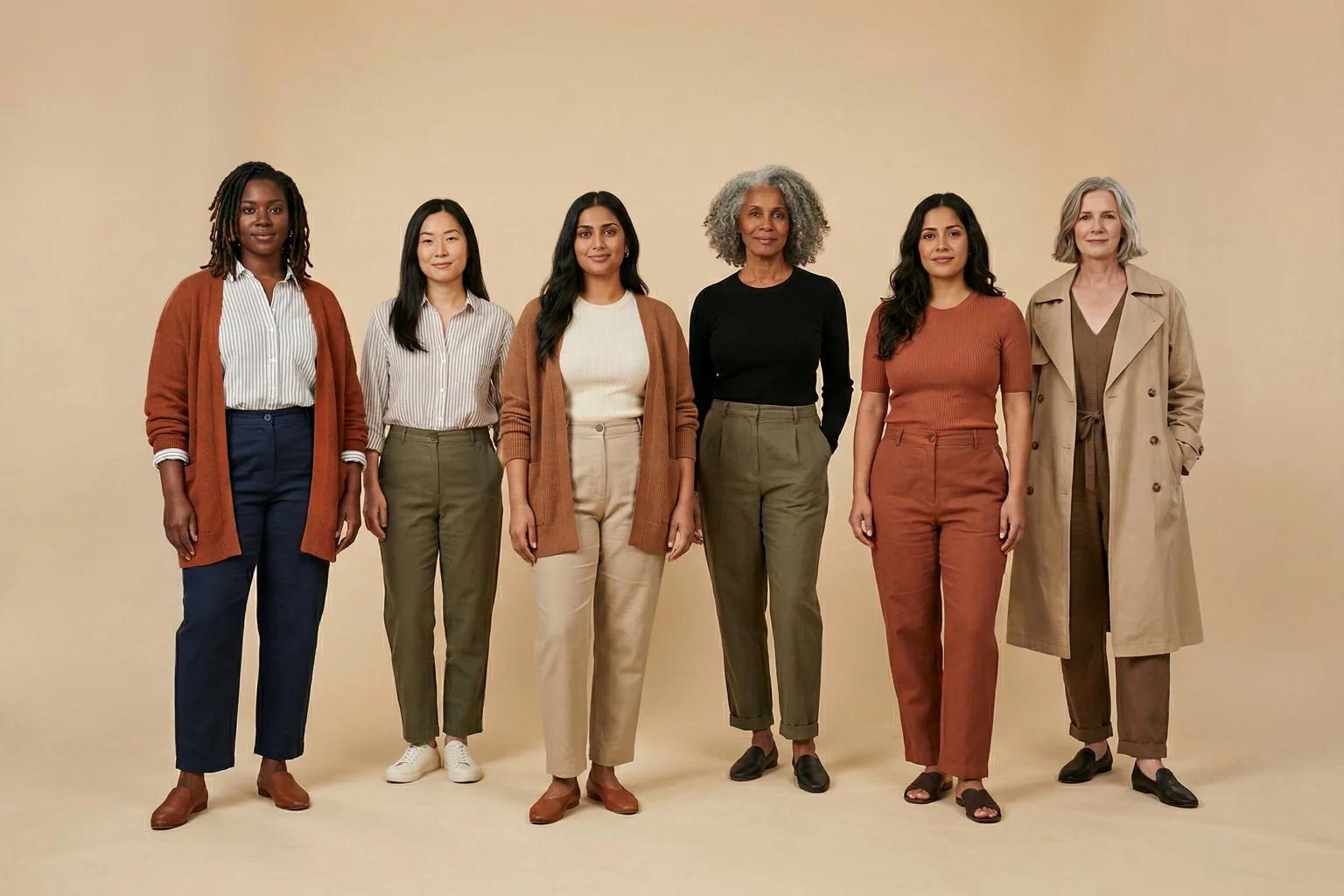
Tradlands has also made its direction on representation more explicit. In its Women of Tradlands storytelling, the brand talks about wanting customers to see themselves in the wardrobe of their dreams and shows a broader range of women, shapes, and sizes in core best sellers. That public commitment gives the expand-diversity use case a strong strategic fit. The challenge is not simply adding more faces to a campaign. It is doing so in a way that preserves the restraint and trustworthiness that make the brand feel premium.
For a label like Tradlands, diversity is not a seasonal campaign theme. It belongs inside the everyday shopping flow: on PDPs, in collection pages, in lifecycle email, in landing pages for size discovery, and in the visual sequencing that helps a shopper imagine fit before she ever reaches the cart. That is exactly where UNSTILL would matter most.
The core merchandising problem
The hard part for a brand like Tradlands is not deciding that broader representation matters. The hard part is operationalizing it at the pace a modern commerce team needs. Once a brand begins to show more body types, more ages, more styling approaches, and more fit contexts, the cost of keeping everything visually coherent rises quickly. Traditional production expands in several directions at once: more casting, more samples, more shot lists, more reshoots, more styling notes, more post-production, and more chances for the catalog to drift away from itself.
That is especially painful for a business centered on timeless core pieces. A blazer, shirtdress, or trouser that stays live across multiple seasons accumulates merchandising debt over time. The original imagery may only show one model or one body type. Some products may have been shot in one studio setup, others in another. Some newer launches may already reflect a more inclusive casting direction, while older best sellers lag behind. The customer sees all of that fragmentation in a single browse session, even if the internal team feels it across quarters.
In this illustrative scenario, Tradlands would use UNSTILL to close that gap. Not by replacing the brand's taste or storytelling, but by turning one strong visual system into a broader matrix of representation. The goal would be simple: let more shoppers see themselves in the brand without requiring every expression of inclusion to start with a new production calendar.
Where UNSTILL would enter the workflow
The first step would not be mass generation. It would be system design. Tradlands already has a distinct visual point of view, so the team would begin by defining the visual constants that must remain true across every generated image. Those would likely include fabric honesty, neutral or softly tonal environments, natural posture, restrained styling, and realistic light that favors texture over gloss. On top of that baseline, the team could build controlled variation in model age, body shape, height impression, skin tone, and styling context.
That approach is important because diversity without consistency often reads like patchwork. Tradlands would not want one image to feel editorial, another to feel marketplace-generic, and a third to feel synthetic. UNSTILL's role in the scenario is to keep the styling grammar stable while expanding who appears inside it. A shopper moving from Porch Balloon Pants to a best-selling knit to a dress page should feel like she is still inside the same brand world.
Operationally, the commerce team could prioritize three product groups first. The first would be evergreen best sellers, because that is where a representation upgrade would influence the largest amount of traffic. The second would be replenishment styles and recurring heroes, because those deserve visual longevity. The third would be new arrivals likely to drive discovery, where broader coverage would make the brand's inclusivity visible earlier in the browse journey.
What the output would look like
The most obvious application would be multi-model PDP coverage. Instead of showing a single model for a hero product, Tradlands could publish two or three visual variants that preserve identical framing and styling logic while changing who the garment appears on. For a shopper, that makes fit, proportion, and visual identity easier to read. For the brand, it creates a more inclusive first impression without requiring separate full-scale shoots for every product family.
The second application would be collection-level storytelling. Tradlands' shop pages position the range as timeless and versatile, with dresses, sweaters, pants, and staples designed to simplify getting dressed. UNSTILL could help the team reinforce that message by building cohesive assortment imagery that shows the same wardrobe philosophy across more women. The result would not be a one-off diversity campaign floating off to the side. It would be a browse experience where inclusion is embedded into the everyday merchandising layer.
The third application would be lifecycle and retention content. If a shopper has viewed a core piece but not purchased, email and paid social retargeting could feature the same garment on a different model while preserving the same styling language. That kind of variation increases relevance without forcing the brand to invent an entirely separate campaign concept.
Why this matters for conversion quality
Representation work only pays off commercially when it improves decision confidence. Tradlands is not a novelty purchase for most customers. It is the kind of wardrobe buy that sits in a higher-trust, higher-consideration zone. Customers want to know whether the piece will earn a place in repeat wear. When imagery shows the garment on a wider range of women in a way that still feels honest, the customer gets a more reliable signal about fit, mood, and self-identification.
That reduces friction in subtle but powerful ways. A shopper who sees only one body type may still appreciate the product, but she has to do more interpretive work. She imagines how the sleeve, rise, or line of the garment might translate to her own proportions. She reads the copy more skeptically. She may leave the PDP to search social proof. In contrast, a more inclusive, well-structured set of images lets the product answer more questions on-page.
In the Tradlands scenario, UNSTILL would not simply add more assets. It would improve the quality of visual evidence. That is a different kind of value. The team would be using imagery to reduce shopper uncertainty, not merely to increase volume for its own sake.
How the team could roll it out responsibly
A careful rollout would likely start with a defined capsule rather than the whole catalog. Tradlands could select a set of hero products that represent different fit categories: a relaxed pant, a structured shirt, a knit, a dress, and an outerwear style. That would let the team evaluate how well the brand system holds across garments with very different drape characteristics.
From there, the team could establish publishing rules. For example, each selected PDP might receive one original hero image, one or two generated diversity extensions, and one styling-detail crop. The brand could then compare performance and on-site behavior against a control set. Key questions would include time on page, depth of image interaction, assisted conversion rate, and return behavior by product family. The point would not be to declare victory from a single metric, but to understand where broader representation is most commercially meaningful.
The brand could also use the rollout to refine internal collaboration. Merchandising would define priority products. Creative would guard the visual system. Ecommerce would determine where multiple model views improve decision support. Growth would test which channels benefit from variation. UNSTILL would sit at the center as the production layer that makes those decisions scalable.
The illustrative business impact
If this scenario were executed well, the first impact would be coverage. Tradlands could extend inclusive representation across a meaningful share of top-traffic products far faster than a traditional reshoot program would allow. That alone would be valuable because it brings the brand's public inclusivity promise closer to the actual shopping experience.
The second impact would be speed. Rather than waiting for the next campaign cycle to broaden representation, the team could improve high-value PDPs and collection pages on a rolling basis. That makes the catalog feel more alive and more aligned with the brand's stated values.
The third impact would be learning. Because UNSTILL would allow the team to introduce controlled visual variation without rebuilding production from scratch, Tradlands could test where diversity coverage has the most measurable effect. That could shape future investments in both live shoots and digital production, making the entire content operation smarter over time.
In practical terms, the scenario would likely lead to more inclusive browse journeys, stronger shopper confidence on best sellers, and a more coherent bridge between Tradlands' storytelling about real women and the actual images customers use to make a purchase.
Why this use case is strategically strong for Tradlands
Some brands use diversity as a top-of-funnel message. For Tradlands, the better opportunity is deeper. The brand already communicates a desire for customers to see themselves in the clothing. UNSTILL would help translate that ambition into repeatable merchandising infrastructure. That matters more than a one-time campaign because it turns a values statement into an operating system.
It would also protect what is already working. Tradlands does not need louder content. It needs broader content that still feels unmistakably like Tradlands. The promise of this scenario is not transformation through visual excess. It is expansion through control. More people see themselves in the wardrobe. The brand keeps its restraint. The commerce team gets scale without losing taste.
For a slow-fashion label built on trust, that is the right version of innovation.