

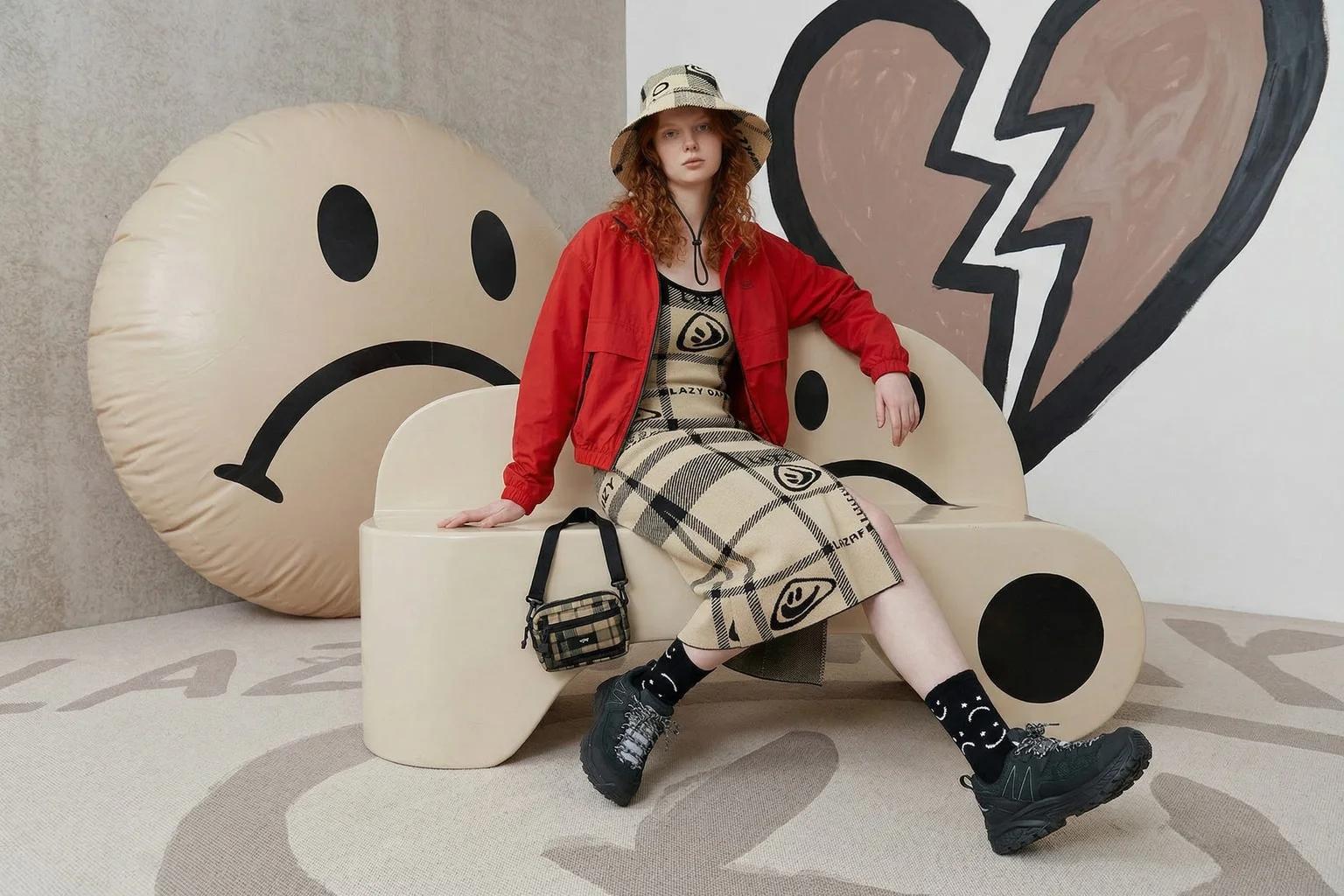
Why speed matters differently for Lazy Oaf
Lazy Oaf is not a generic trend follower. Its public identity is built around irreverent design, youth nostalgia, graphic play, and a refusal to look like everyone else. Since 2001 the brand has positioned itself as a culture-led, non-conforming streetwear label with bold prints, distinctive knits, and an art-forward visual voice. That means the goal is not to chase every passing trend. It is to respond quickly when a cultural moment overlaps with the brand's existing point of view.
That overlap is where opportunity lives. A graphic-led brand can often create a strong commerce moment by framing the right drop inside the right cultural conversation. But doing that well requires speed. The team needs to test ideas, not just approve one campaign and hope it lands. It needs multiple treatments that preserve the brand's attitude while adapting to changing social and merchandising context.
This is exactly what trend-responsive imagery should mean in a Lazy Oaf context. Not reactive sameness, but rapid concept testing around a brand world that is already distinctive. In this illustrative scenario, UNSTILL would help the team move more ideas from concept to market-ready visual without forcing each one through full production.
The bottleneck in culture-led merchandising
Cultural timing is unforgiving. A relevant visual direction can feel electric on Monday and stale by the following week. That does not only apply to viral moments. It also applies to micro-moods in youth fashion, styling energy, internet humor, and community conversation. Brands like Lazy Oaf often have the right creative instincts, but they still face a practical limit on how many visual ideas they can stage, shoot, and edit before the moment changes.
The result is usually one of two bad outcomes. Either the team narrows too early and under-tests potentially strong concepts, or it spreads itself too thin chasing too many ideas with insufficient production support. Neither is ideal. What the brand needs is a cheaper, faster layer of concept variation that still feels true to the identity.
UNSTILL would provide that layer. The brand could establish the core visual grammar of a drop, then use generation to test multiple contextual or stylistic interpretations before committing paid support or broader rollout.
How the workflow would look
The starting point would be a drop, capsule, or product story with a strong graphic or art direction already attached to it. Lazy Oaf's collections often contain exactly that kind of anchor: a knit, illustration, or styling cue that can support multiple visual narratives. UNSTILL could then produce alternate concept directions around the anchor without forcing the team to fully produce each one in the studio.
Those variations might explore mood, background language, composition, styling energy, or channel format while preserving the product and brand attitude. The creative team could review them quickly, identify which directions feel most Oaf-like and most commercially promising, and then use those learnings to guide where paid media, social attention, and homepage placement should go.
That process is not about automating taste. It is about protecting taste by giving the team more chances to find the sharpest expression of it before budget and timing lock in the final answer.
Why this is useful beyond launch week
Trend-responsive imagery is usually associated with top-of-funnel buzz, but the value extends deeper. Once a concept starts to resonate, the brand needs enough creative depth to continue expressing it across remarketing, follow-up email, collection support, and social sequencing. A single hero asset may announce the drop, but it rarely sustains the narrative.
Lazy Oaf would benefit from having multiple concept-true extensions around a winning product story. That would allow the brand to keep the same attitude alive without repeating the exact same image. Repetition is useful; visual stagnation is not. UNSTILL would give the team more room between those two outcomes.
It would also help reconcile brand identity with channel behavior. Some concepts are strong but too subtle for paid social. Others work well on site but need more punch in feed environments. Faster concept testing would let the team make those distinctions earlier and act on them with less friction.
A practical pilot
The cleanest pilot would center on one collection or mini-drop where visual experimentation is already part of the creative process. The team could define a baseline art direction, then use UNSTILL to produce several concept families around it. Those concepts could be evaluated internally before any serious paid support is committed.
The success criteria would likely include more than click-through rate. Lazy Oaf would care about whether the concepts feel brand-right, whether they create stronger engagement in social contexts, and whether faster testing leads to better budget allocation. If one visual direction clearly outperforms others, the team could then scale the winner with more confidence and less wasted production effort.
This approach is particularly well suited to brands with a strong cult identity. The risk in culture-led fashion is not only irrelevance; it is flattening the brand into generic trend behavior. Testing more concept directions before scaling helps avoid that flattening.
The operational payoff
If this workflow worked, Lazy Oaf would gain a more responsive studio model without needing to increase production pressure every time a drop goes live. The creative team could keep more options open for longer, which is valuable when commercial timing and aesthetic timing do not perfectly line up.
It would also reduce wasted spend. Instead of backing one creative direction too early, the team could gather stronger directional evidence first. That is useful both for paid media and for homepage or collection-slot decisions, where visual hierarchy has real revenue implications.
The broader payoff is momentum. Culture-led brands thrive when their product stories feel alive, connected, and aware. More concept-responsive imagery helps the brand stay in that state without becoming chaotic.
The illustrative result
In this scenario, the first result would be more concepts tested per drop. That alone would give Lazy Oaf a better filter for deciding which visual narratives deserve broader distribution.
The second result would be faster movement from cultural cue to live merchandising support. The team could react while the mood is still current instead of after it has passed.
The third result would be less waste in creative and media. By learning earlier which directions feel strongest, the brand would avoid over-investing in ideas that are visually interesting but commercially weak.
Why UNSTILL fits this brand particularly well
Lazy Oaf's visual challenge is not a shortage of originality. It is the difficulty of turning originality into a faster and more testable commerce process. UNSTILL fits because it enables breadth without asking the brand to dilute itself. The team can explore more angles while keeping the same distinctive voice.
That is what trend-responsive imagery should look like for a brand with real point of view. Not generic agility. Focused, identity-safe experimentation. In this illustrative case study, UNSTILL becomes a tool for sharpening that experimentation and turning it into a better merchandising engine.
For a label built on keeping things weird, the commercial advantage is not conformity. It is having a faster way to discover which version of weird will actually convert.