Fashion teams often talk about pose as a matter of taste. In ecommerce, pose is much more practical than that. It determines how clearly a customer can understand the garment. It influences whether fit feels legible, whether key details stay visible, and whether the product feels easy to trust. A pose can make a strong product image better, or it can quietly undo all the good work done by the garment, lighting, and styling.
That is why the best ecommerce poses are not necessarily the most memorable ones. They are the ones that help people shop.
This may sound obvious, but it is easy to forget because fashion images are expected to carry personality. The challenge is not removing personality. The challenge is choosing poses that express personality without sacrificing clarity.
What a useful ecommerce pose needs to do
A useful ecommerce pose does three things at once. It preserves the shape of the garment. It makes fit easier to read. It supports the role of the image.
If the image is a PDP hero, the garment should stay central and legible. If the image is headed to a category page, the pose should still read well at small size. If the image is for social, it may carry more movement, but the product still needs to make sense in a second.
This sounds straightforward, but it immediately rules out a lot of pose choices that look strong in isolation yet weaken the product once the image is used in commerce.
Why straightforward poses often outperform dramatic ones
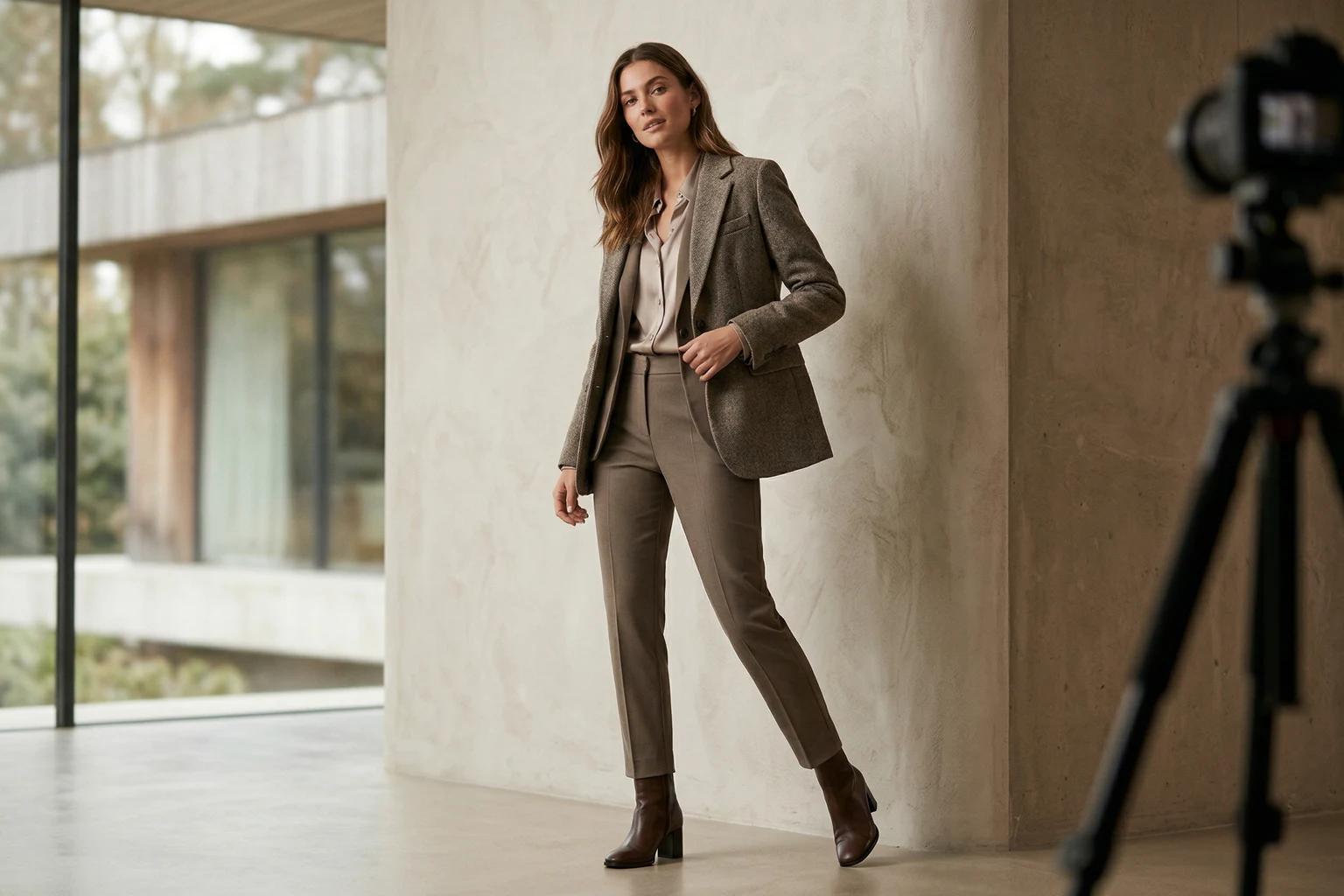
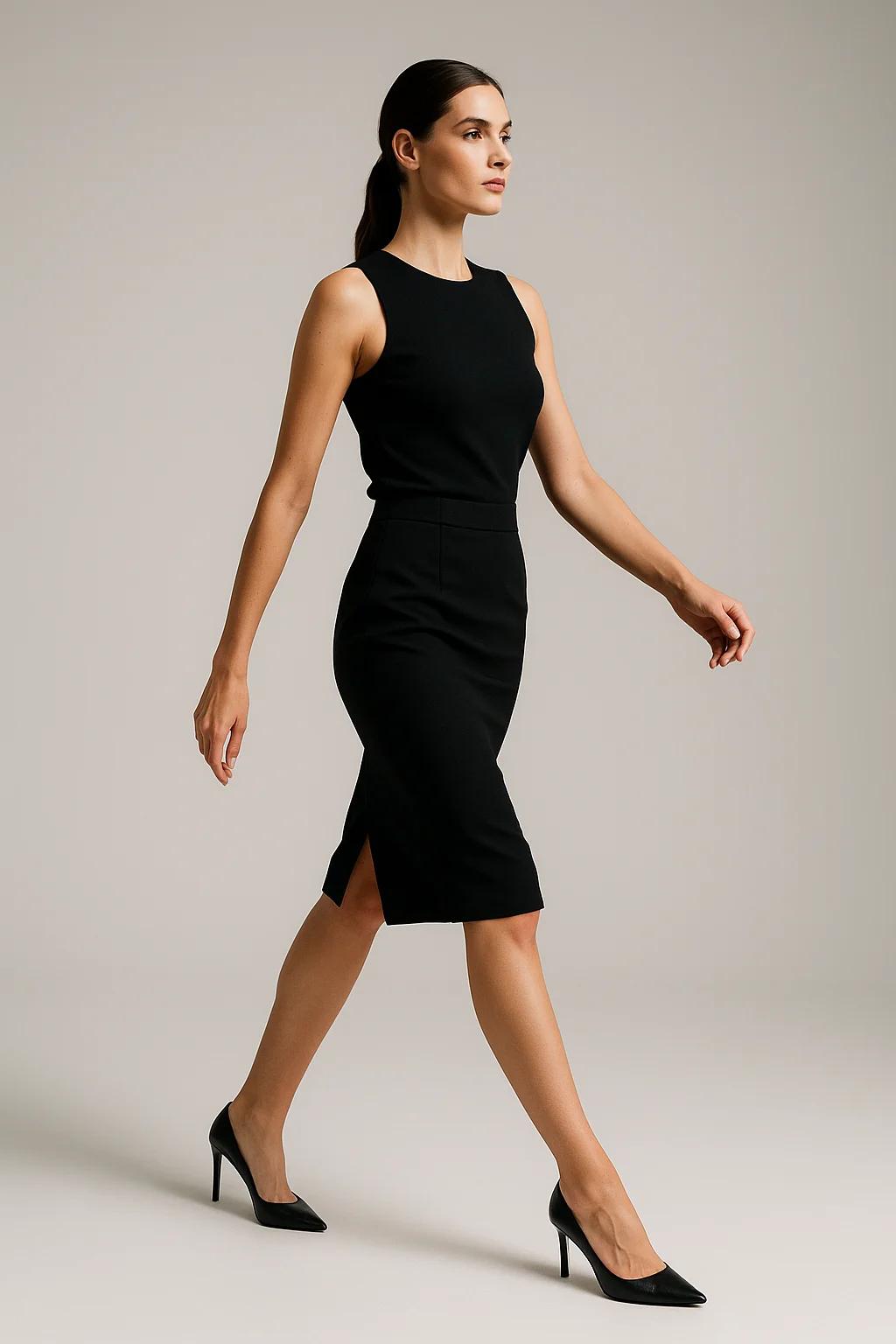
A calm standing pose or a gentle step may not excite a creative meeting, but those poses often win on the site because they let the customer see what matters. The silhouette stays readable. The drape remains visible. The garment is not crushed by movement or hidden by limbs. This kind of pose also scales well because it can be repeated across many products without making the catalog feel chaotic.
Dramatic poses can absolutely have value. They can help certain products feel alive. They can add energy to social and launch imagery. The problem comes when they are used by default. A dramatic pose is often more demanding. It asks more of the garment, the crop, the background, and the viewer. If those elements do not line up, the pose becomes noise.
That is why simplicity is usually the safest baseline in ecommerce.
Match pose to garment type
Different garments want different pose logic.
Soft dresses, skirts, and relaxed wide leg styles often benefit from some movement because drape is part of the appeal. A still pose may show the item clearly, but a light sense of motion can reveal how the fabric behaves.
Structured tops, denim, shirting, and tailored pieces often benefit from more stability because the shopper is evaluating shape, line, and construction. In those cases, a calmer pose can communicate more.
Knitwear can go either direction depending on whether the selling point is comfort, silhouette, or styling versatility. The important point is that pose should be chosen for the product, not chosen once and forced onto every item.
Why arm placement matters so much
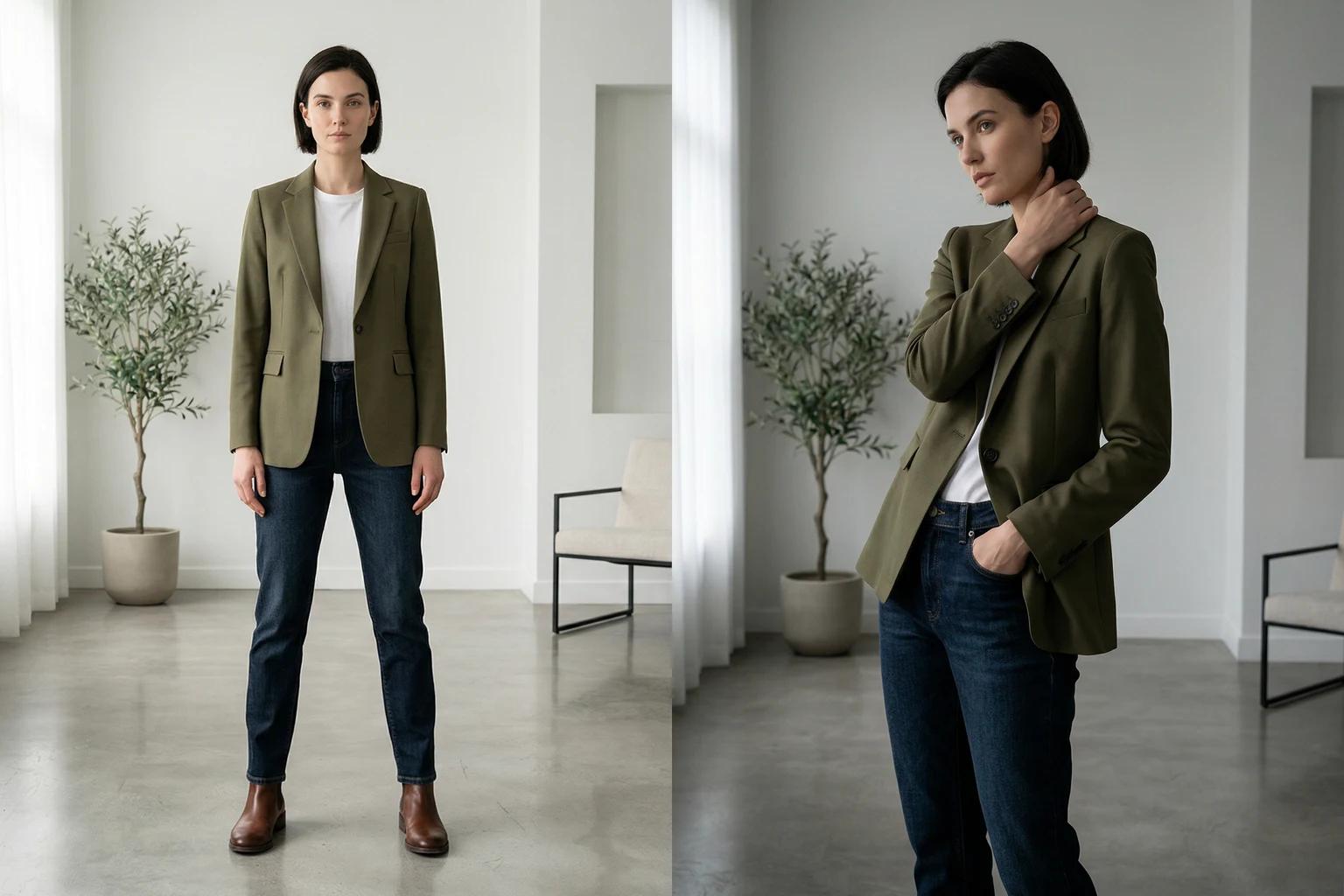
Arms are one of the most common sources of product confusion in fashion imagery. They hide side seams, crush waist definition, cover closures, and distort sleeve shape. A pose may look natural overall, yet one bent arm can make the garment much harder to understand.
That is why good ecommerce pose direction often comes down to very practical things. Are the arms opening space around the body or closing it. Are they helping the viewer understand silhouette or interrupting it. Are they creating a confident frame for the garment or cutting through it.
This is a small detail with a very large effect.
Movement should reveal, not blur
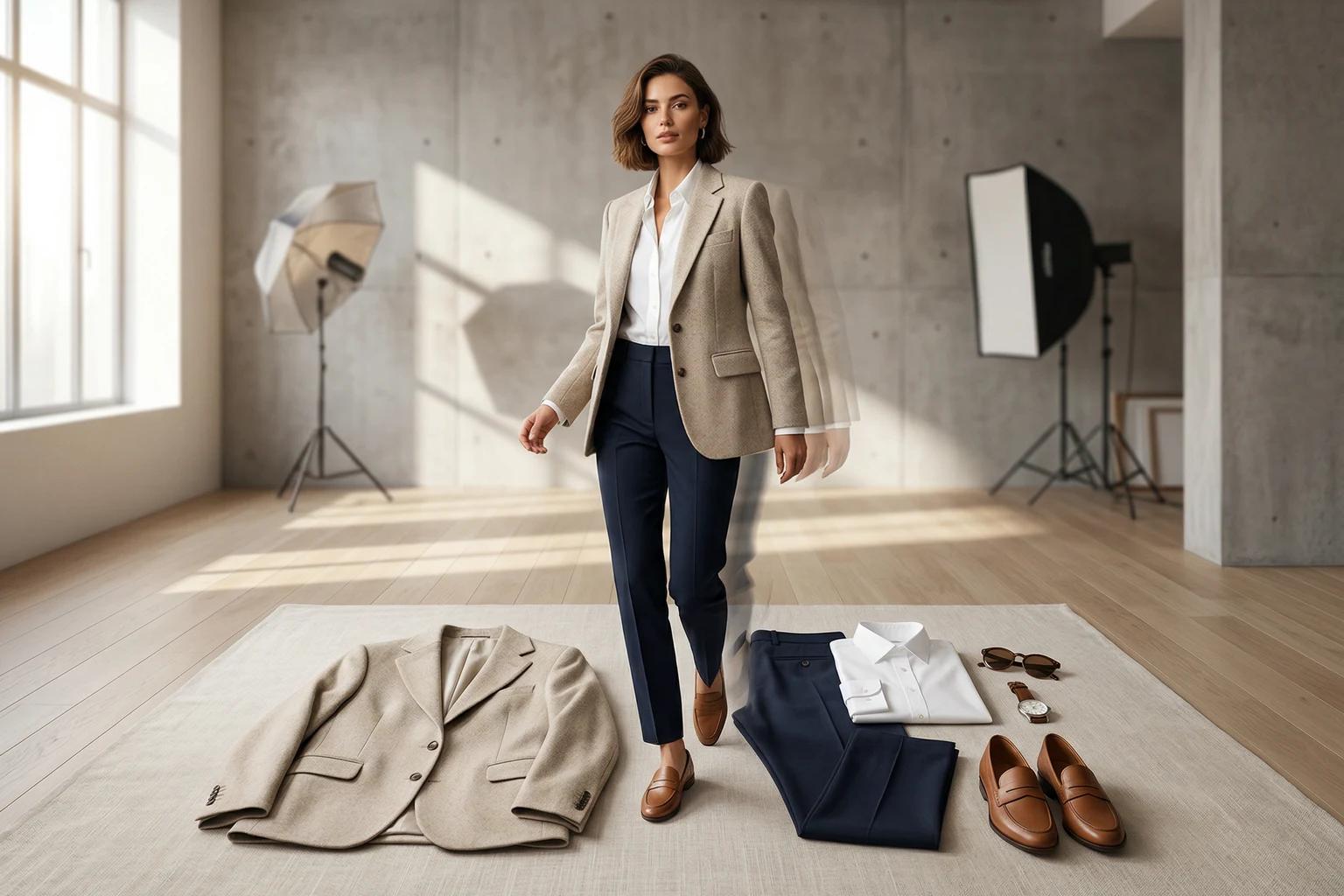
Movement is useful when it clarifies the product. A slight step, a gentle turn, or a soft shift in weight can reveal drape and body relationship beautifully. Movement becomes a problem when it introduces uncertainty. If the garment shape becomes hard to read, if the hemline disappears, or if the image feels like a still from a motion sequence rather than a useful product view, the pose has gone too far for commerce.
This is especially important in categories where shoppers are already making careful fit judgments. The image should reduce uncertainty, not add a stylish version of it.
The relationship between pose and crop
Pose does not operate alone. A pose that works in a wider frame may fail in a tighter crop. A half turn that looks elegant in a full image may make less sense once the image is used in a card or mobile layout. That is why teams should review pose choices in the actual contexts where the images will appear.
This also explains why some strong campaign poses underperform on product pages. The pose may have been designed for impact, not for the practical dimensions of ecommerce viewing. The moment it is shrunk, cropped, or surrounded by other products, its strengths change.
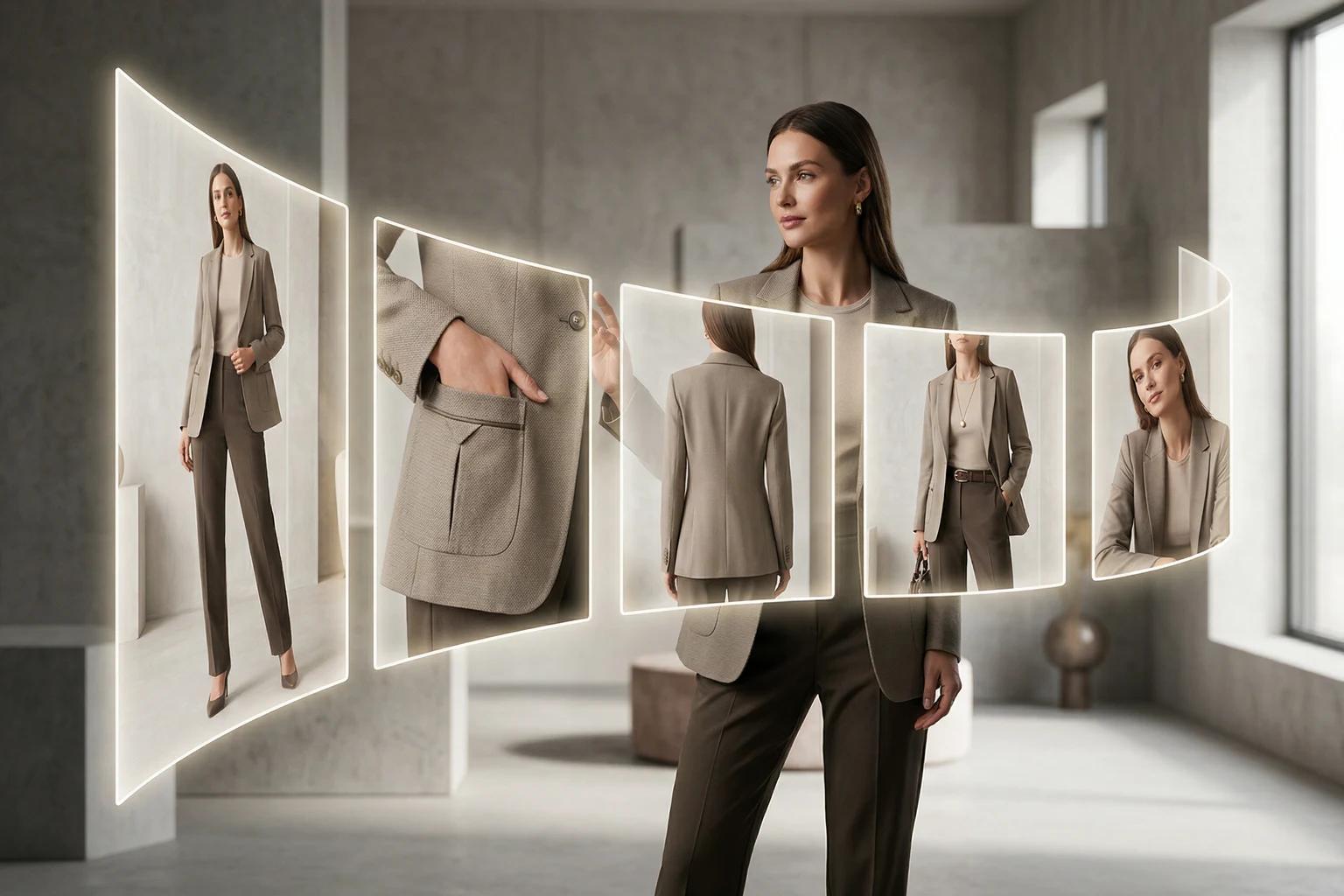
Review in context is not optional if pose quality matters. This is also why pose planning belongs inside the wider gallery strategy. How to build a fashion PDP image sequence that helps shoppers decide faster is a strong companion if your team is deciding which pose belongs in the hero frame versus later images.
Standardization can improve brand quality
Many brands resist standardized pose direction because they worry it will make the site feel repetitive. In practice, a moderate amount of standardization often makes the brand feel more premium. It reduces visual noise. It helps customers compare products more easily. It makes the catalog feel intentional instead of pieced together over time.
This does not mean one pose forever. It means building a small family of poses that work for different garment types and channel needs. One pose family may serve denim and shirting. Another may work for dresses. Another may be reserved for more energetic social use. This creates variety with control.
That is a much stronger system than choosing from scratch every time.
Common pose mistakes in ecommerce fashion
The first mistake is choosing editorial poses for product page jobs.
The second is ignoring what the arms and hands are doing to the garment.
The third is using a movement pose on a product where shape clarity matters more than energy.
The fourth is picking the pose based on the model alone rather than the interaction between model and garment.
The fifth is failing to review the pose at thumbnail size, where many subtle strengths or weaknesses become very obvious.
These issues are easy to miss in a creative review. They become harder to ignore once the image is live.
How pose influences return confidence
One subtle reason pose matters is that it affects customer confidence before checkout and after delivery. When a pose makes sleeve length, garment width, or overall line hard to understand, the shopper fills the gap with assumption. Sometimes that assumption is generous. Sometimes it is not. In either case, the image has stopped being a dependable guide.
This is why useful pose direction can have an effect beyond click behavior. It can shape the entire quality of expectation around the product. If the customer feels she understood what she was buying, the image has done its job more honestly. That is true even when the pose is elegant and expressive. The expression just has to sit on top of clarity instead of replacing it.
Teams that review poses through this lens often make better decisions. They stop asking whether a frame looks fashionable enough and start asking whether it communicates enough.
How to test poses without wasting time
A simple test works well. Keep the garment, model, and background fixed. Compare one steady pose against one slightly more dynamic pose. Review both in the destination context. Ask which image helps the customer understand the product faster. Ask which one feels more aligned with the brand. Ask which one could be repeated across similar products without causing drift.
That test often produces a clearer answer than a wider pose gallery ever will.
If you are building this workflow inside UNSTILL, the pose step is part of the flat lay and mannequin flows for exactly this reason. It lets you control one of the most commercially important parts of the final image. The guide to choosing models, poses, and backgrounds covers how to keep that choice structured.
Build a pose library instead of restarting every time
The easiest way to improve pose quality over time is to keep a small internal library of what already works. Note which poses perform best for dresses, knitwear, denim, or tailored pieces. Note which ones preserve product understanding at card size. Note which ones feel strong on the site but too quiet for social, and which ones do the reverse.
This turns pose direction into an asset instead of a recurring debate. New products can start from proven options instead of forcing the team to reinvent the same decision on every launch. Over time, that library becomes part of the brand's visual operating system.
The practical conclusion
Fashion model poses for ecommerce should not be judged only by style. They should be judged by usefulness. The right pose helps shoppers understand fit, silhouette, and product detail without making the frame feel dead. It gives the brand personality without turning the garment into a secondary character. It can be repeated often enough to create consistency while still leaving room for variation where the channel truly needs it.
That is the pose standard worth building toward. Not the most theatrical image, but the clearest persuasive image for the job in front of it. If you want to test pose direction on real products, use Unstill to compare one clean commerce pose and one more expressive variant before you commit the rule across a category.