AI fashion photography has been talked about as if it replaces the entire creative process. That is usually the wrong frame. For most apparel brands, the real value is not magic and it is not total automation. The real value is operational. It helps teams get more useful imagery from the product photos they already own, test more creative directions without booking another shoot, and close the gap between what merchandising needs and what the photo calendar can realistically support.
That is why the strongest teams are not asking whether AI can make a dramatic image. They are asking better questions. Can it help us launch faster. Can it help us refresh older catalog pages. Can it help us show more model variety without rebuilding production from the ground up. Can it help us create channel specific assets without creating channel specific chaos.
If you work in fashion ecommerce, that is the level where AI fashion photography becomes worth understanding. Not as a novelty. As a system.
What AI fashion photography actually means in ecommerce
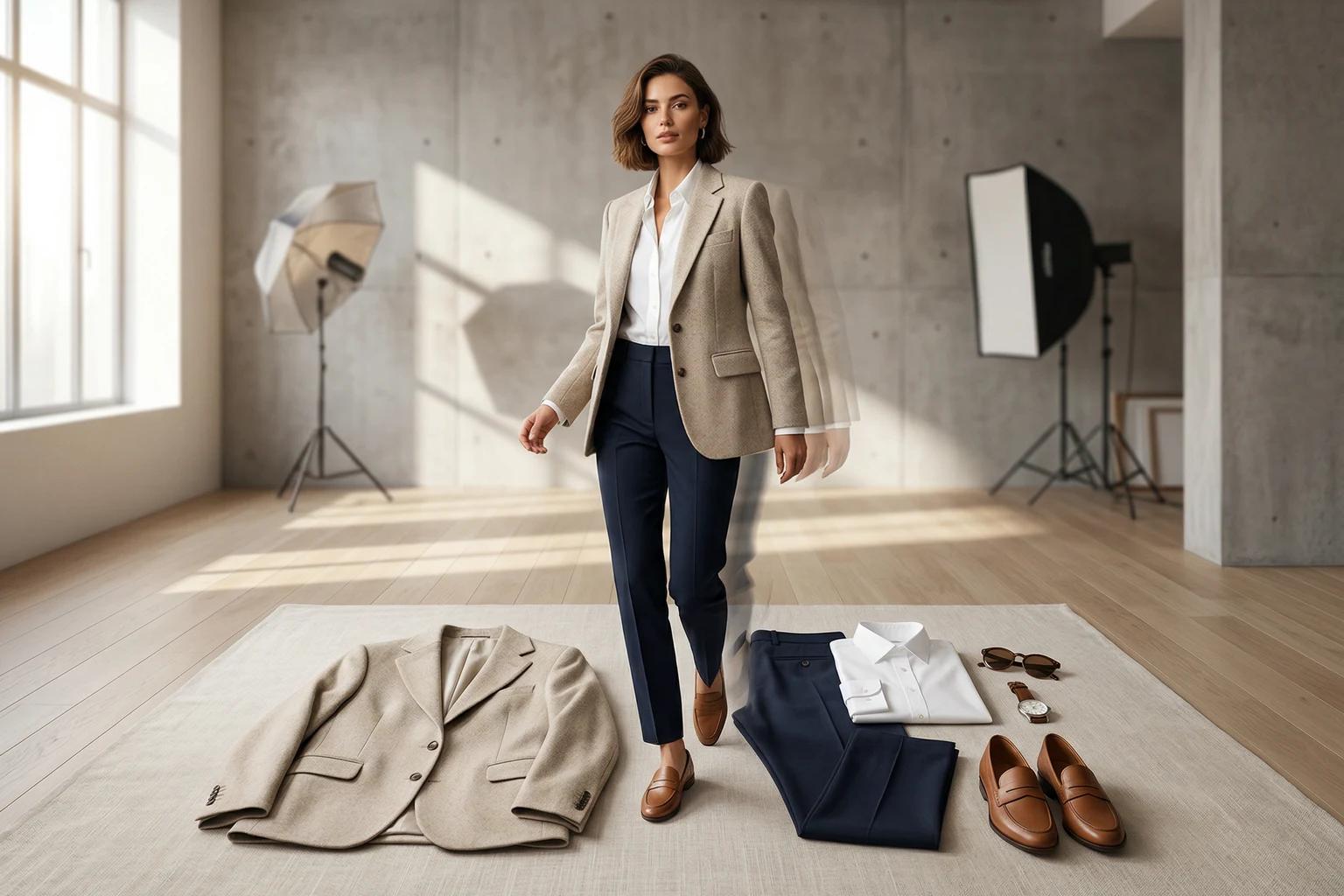
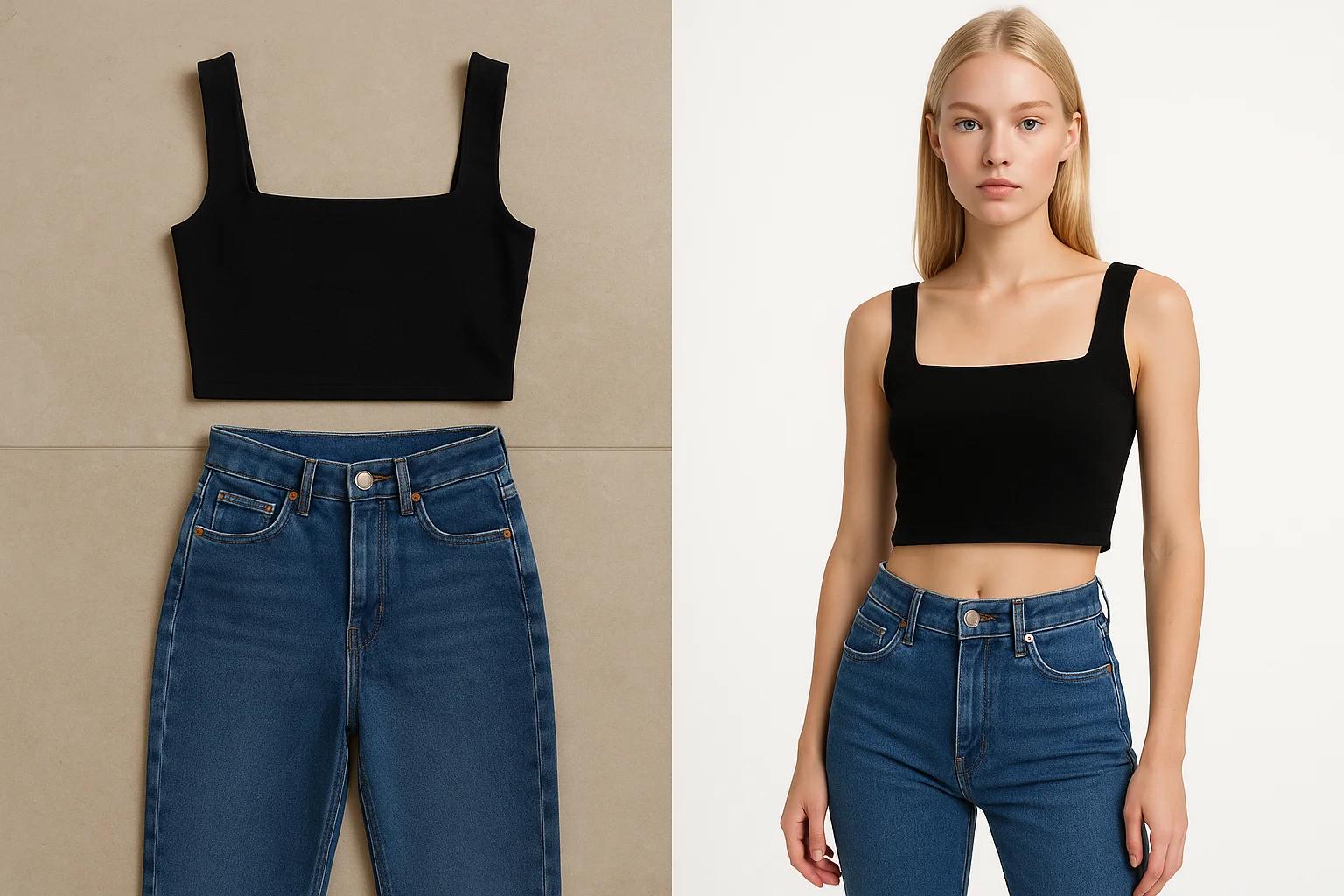
In practice, AI fashion photography usually refers to using existing product imagery as source material, then generating new images that show the garment on a new model, in a new pose, or in a new visual setting. The best systems are not guessing from a text prompt alone. They are grounded in the garment image you provide. That grounding matters because apparel shoppers care about fit, drape, proportion, and confidence. If the product stops feeling trustworthy, the image stops doing its job.
That is why fashion teams should think less about image generation in the abstract and more about controlled transformation. A source garment comes in. The team chooses what should change and what should remain stable. The output should still feel like the product. It should still fit the brand. It should still help a customer shop.
This may sound obvious, but it is the difference between a useful tool and an expensive distraction.
Where traditional fashion photography still wins
A real shoot is still the right choice when the creative idea depends on a specific set, a specific casting direction, or a specific point of view that belongs to the photographer. Brand campaigns, seasonal hero films, editorial partnerships, and high concept lookbooks still benefit from physical production because the value is in the authored vision itself.
Traditional photography also remains the safest option when the garment is extremely complex, highly reflective, or dependent on tactile nuance that only a carefully directed shoot can communicate. If the whole campaign lives or dies on a highly specific visual language, then the human creative team should be in full command of the final frame.
AI fashion photography becomes more compelling in a different zone. It helps when the product is already photographed, the commercial need is clear, and the bottleneck is not taste alone. The bottleneck is time, budget, throughput, or variation.
Where AI fashion photography genuinely helps
The strongest use cases are practical ones that appear every week inside growing apparel teams.
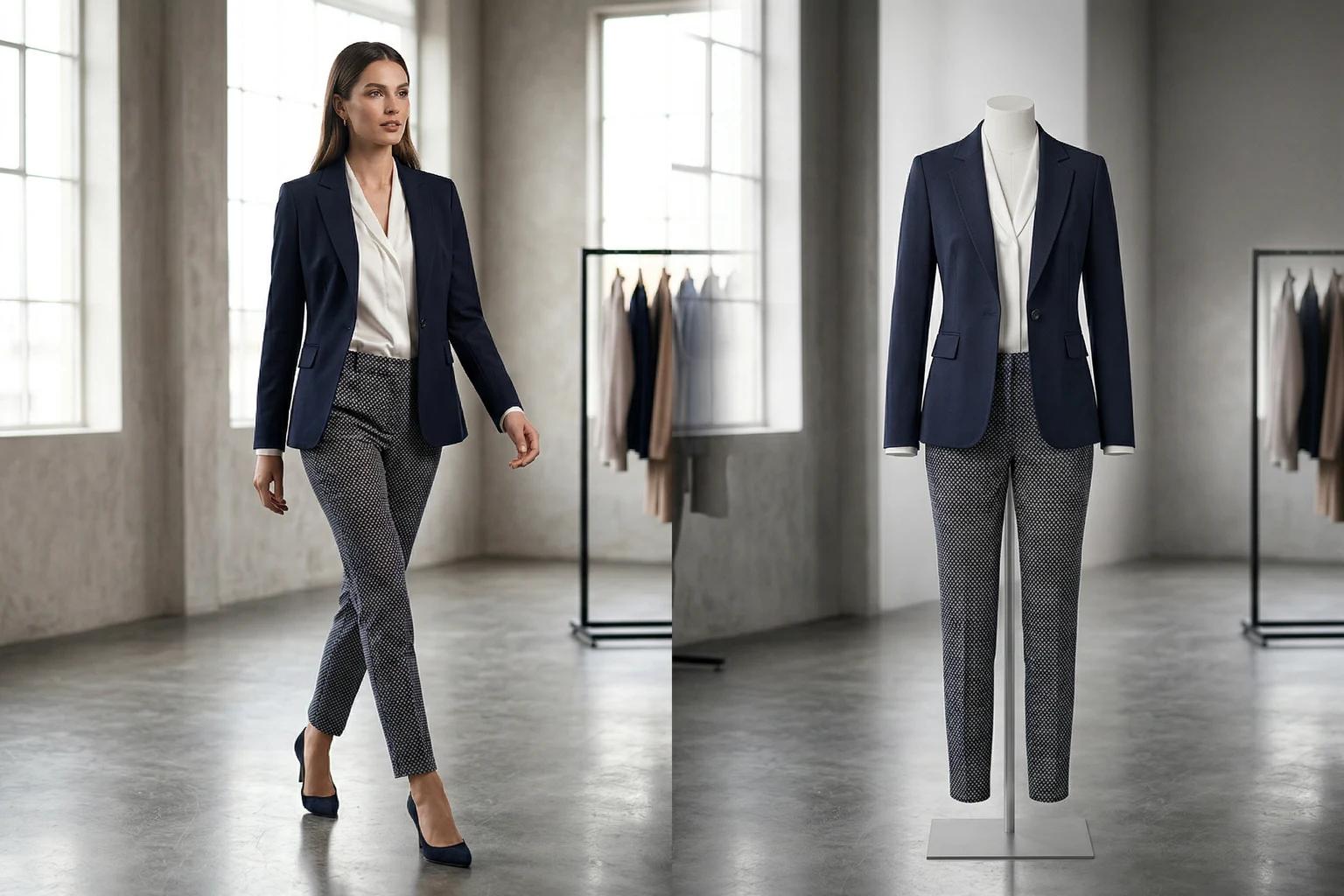
One common use case is catalog expansion. A team has flat lay, mannequin, or on model images for a collection, but it wants more variety for product pages, paid creative, launch email, or marketplace feeds. Another common use case is legacy content refresh. Older images may still show the garment accurately, but the casting no longer reflects the brand, or the background feels dated, or the product photography lacks consistency across categories.
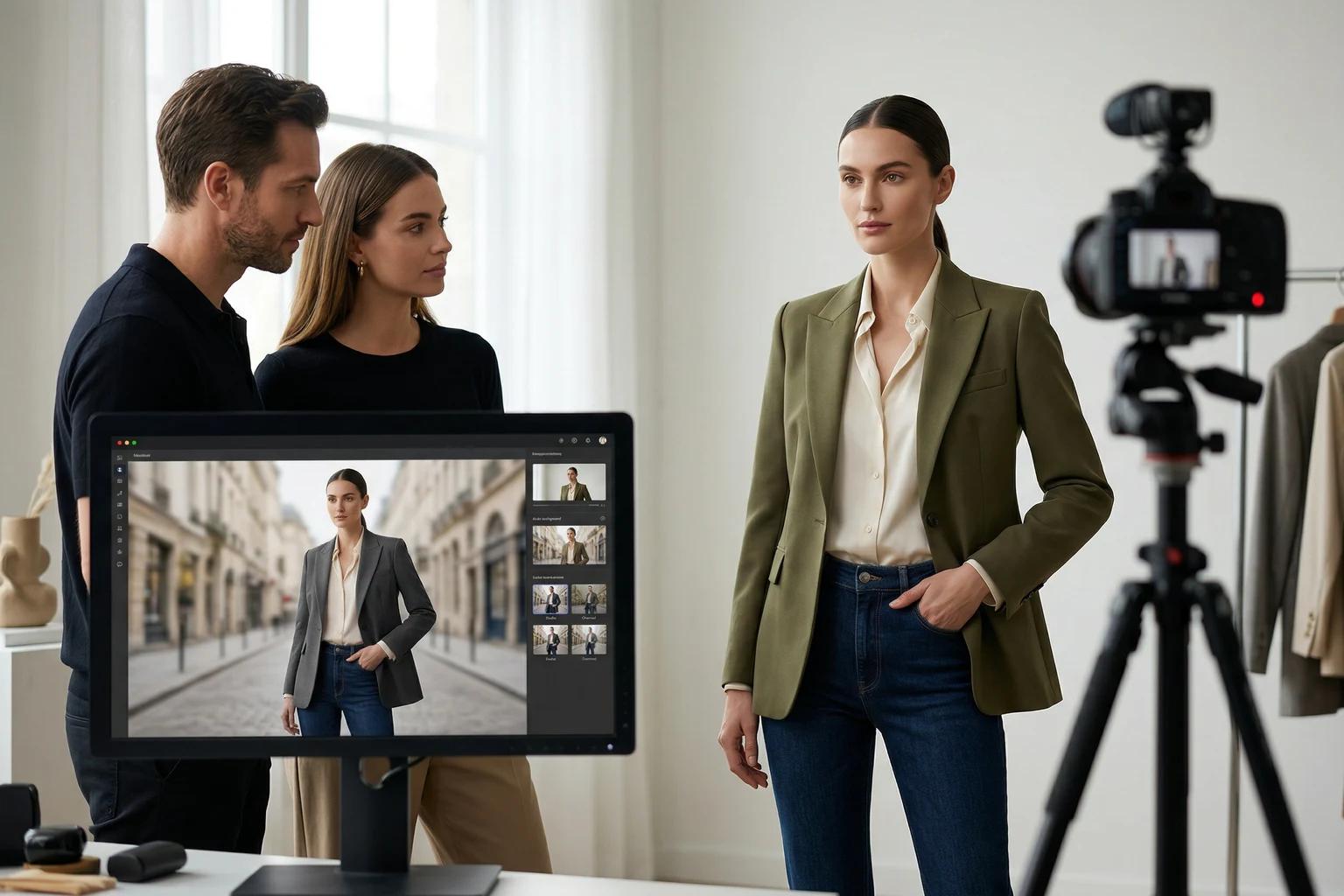
A third use case is creative testing. A team wants to see how a dress performs with a cleaner pose, a more minimal setting, or a different model direction before committing to a broader rollout. A fourth use case is channel adaptation. One source image may be good enough for a product detail page, but not strong enough for social or launch assets. AI can help create additional versions without forcing a new production cycle.
All of these cases have one thing in common. They start from a real garment image and aim for a commercially useful outcome.
Teams working from flat-lays usually need the workflow in how to turn flat lay photos into model images, while brands sitting on structured ghost mannequin photography usually need the decision framework in mannequin vs model photography for ecommerce.
The biggest mistake brands make
The most common mistake is treating AI fashion photography like a slot machine. Teams upload a weak source image, choose a random model, pick an expressive background, run too many combinations at once, and then decide the technology is inconsistent when the results feel unstable.
That is not a technology problem first. It is a workflow problem.
Strong output depends on strong inputs and clear decisions. The source garment has to be readable. The model choice has to fit the product and the audience. The pose has to help shoppers understand fit. The background has to support the destination. Review has to be disciplined. If any one of those choices is careless, the output will look careless too.
The brands that get good results tend to work in smaller loops. They test with intent. They learn what combinations suit their label. They build a repeatable visual system instead of chasing one spectacular image.
Source images still matter more than people want to admit
Good AI fashion photography still begins with product photography fundamentals. The garment needs clear shape. The crop needs enough room for the item to be understood. Lighting needs to reveal color and structure instead of fighting it. Background clutter needs to stay restrained. If the source image hides key information, the system has to invent what it cannot read.
That is why flat lay and mannequin images can be especially useful. They often present the garment in a clean, legible way. On model images can work beautifully too, especially when the product remains easy to read, but they carry more variables because hair, arms, posture, and environment already influence the frame.
If a brand wants more reliable output, the first improvement is usually not a better prompt. It is a better source file.
Why model choice is a merchandising decision
Model selection is often discussed as a creative flourish. In ecommerce it is much more than that. The model communicates audience, aspiration, fit context, and emotional tone. It changes how the garment is perceived even when the garment itself stays the same.
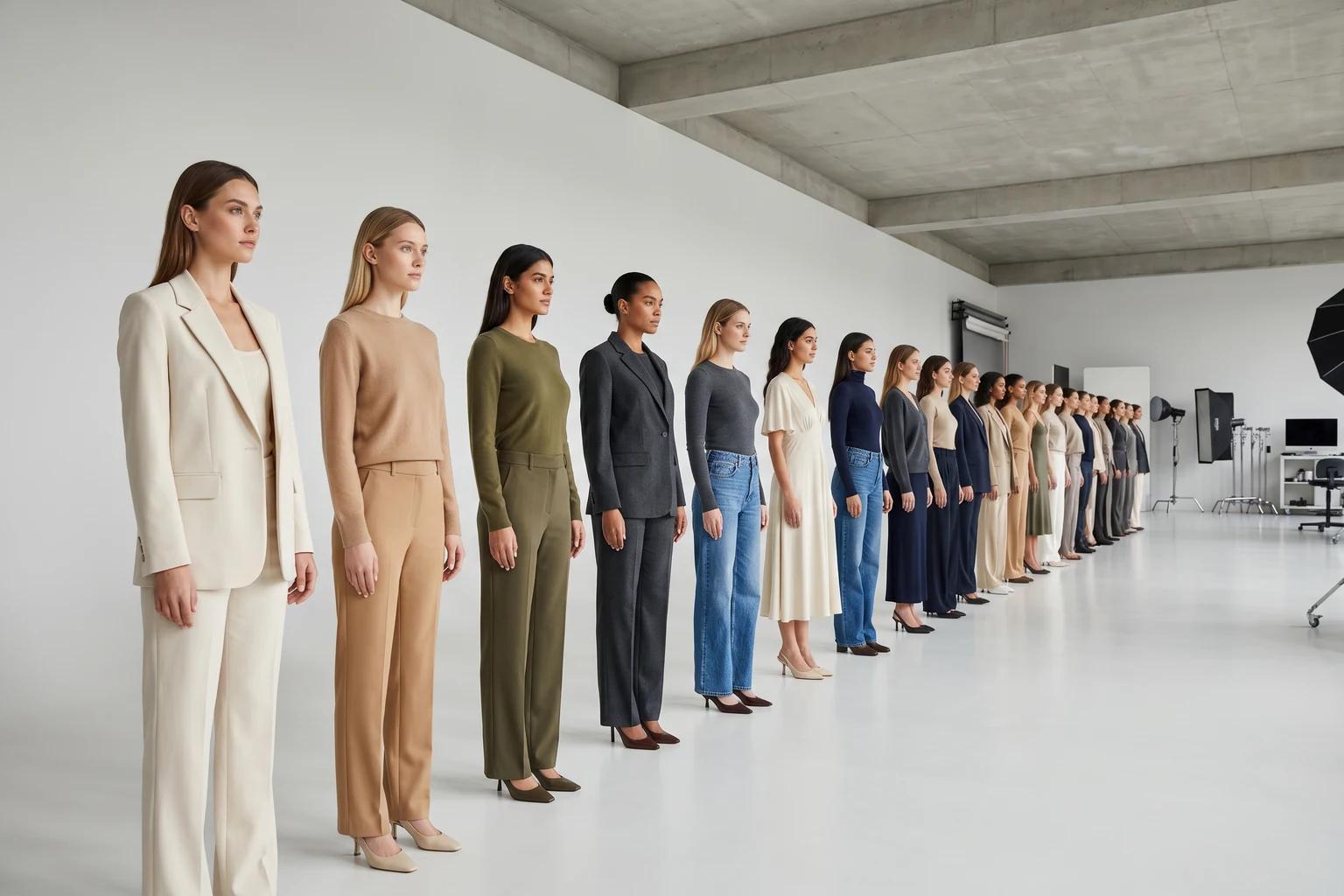
That is why random variation is expensive. A brand may think it is increasing choice by selecting several very different models, but it may actually be weakening the visual coherence of the catalog. Good model direction does not mean sameness. It means controlled range. It means choosing people who widen representation while still belonging to the same brand world.
When teams treat model selection as merchandising, the outputs get stronger fast. They stop asking who looks interesting in isolation and start asking who helps the product land in a way that feels honest and aligned.
Pose and background shape product trust
The same principle applies to pose and background. These are not decorative settings. They change what the customer can understand. A clear pose can reveal length, drape, and proportion. A cluttered pose can obscure the very thing the product page exists to sell.
Background choice works the same way. A clean backdrop can make the garment feel premium because it is easy to read. A scene can be useful when the image is headed to social or campaign use, but only when the environment supports the brand story instead of competing with it.
This is one reason AI fashion photography works best as a structured workflow. You are not simply generating style. You are deciding how clearly the product should be seen, where the image will live, and what kind of shopper experience it should create.
How to judge whether the output is good
Many teams evaluate generated fashion imagery with the wrong question. They ask whether the image looks impressive. That matters less than they think.
A better review sequence is more grounded.
First, does the garment still feel trustworthy.
Second, is the fit easy to understand.
Third, does the image look like it belongs on this brand's site.
Fourth, does it suit the channel it is meant for.
Fifth, is it good enough to repeat as a system, not just keep as an exception.
That last question matters a lot. A one off image can be interesting. A repeatable image language is valuable.
What apparel brands should expect in the next year
Over the next year, AI fashion photography will probably become less about shock value and more about operating discipline. The winners will not be the brands that generate the most images. They will be the brands that understand where the technology belongs in the production stack.
For some teams it will sit between catalog photography and channel adaptation. For others it will help extend older product imagery. For others it will become the fastest way to test model variety across a collection before deciding what deserves a full shoot. In all cases, the companies that treat it as an extension of merchandising and creative operations will get more value than the ones that treat it as a toy.
This is similar to what happened with other digital production tools. The early conversation is always about spectacle. The lasting value comes from repeatability.
How to start without making a mess
If your brand is new to AI fashion photography, start with a simple product set. Choose garments with clean silhouettes and readable source images. Use one clear workflow. Keep the first batch small. Compare only a few variables at a time. Review the results against a real business question.
If you need a practical first lane, start with one of these:
- Refresh a few older product pages that have strong garments but dated casting.
- Turn a strong flat lay image into model imagery for a launch email or category page.
- Create a second visual direction for best selling basics without reshooting the full collection.
That kind of test will teach you more than a huge experimental batch.
If you want a framework for the first project, the UNSTILL getting started guide is the right place to begin. If the main challenge is input quality, the source photo guide will save more time than any amount of guesswork later.
The practical conclusion
AI fashion photography is not a replacement for taste, styling, or good product photography. It is a lever. Used badly, it creates visual noise faster. Used well, it helps apparel teams move faster, show products more clearly, extend creative range, and build a more efficient image pipeline.
That is why the best way to think about it is not futuristic. It is operational. If a tool can help your team create more trustworthy fashion imagery from the assets you already have, without forcing a new shoot every time the business needs variation, then it deserves a serious place in the workflow.
That is the opportunity in front of apparel brands right now. Not perfect automation. Better decisions, better reuse, and better output at a pace the old production model often struggles to match. If you want to test that with your own catalog, start small in Unstill with one clean product set and measure whether the new workflow reduces launch friction.