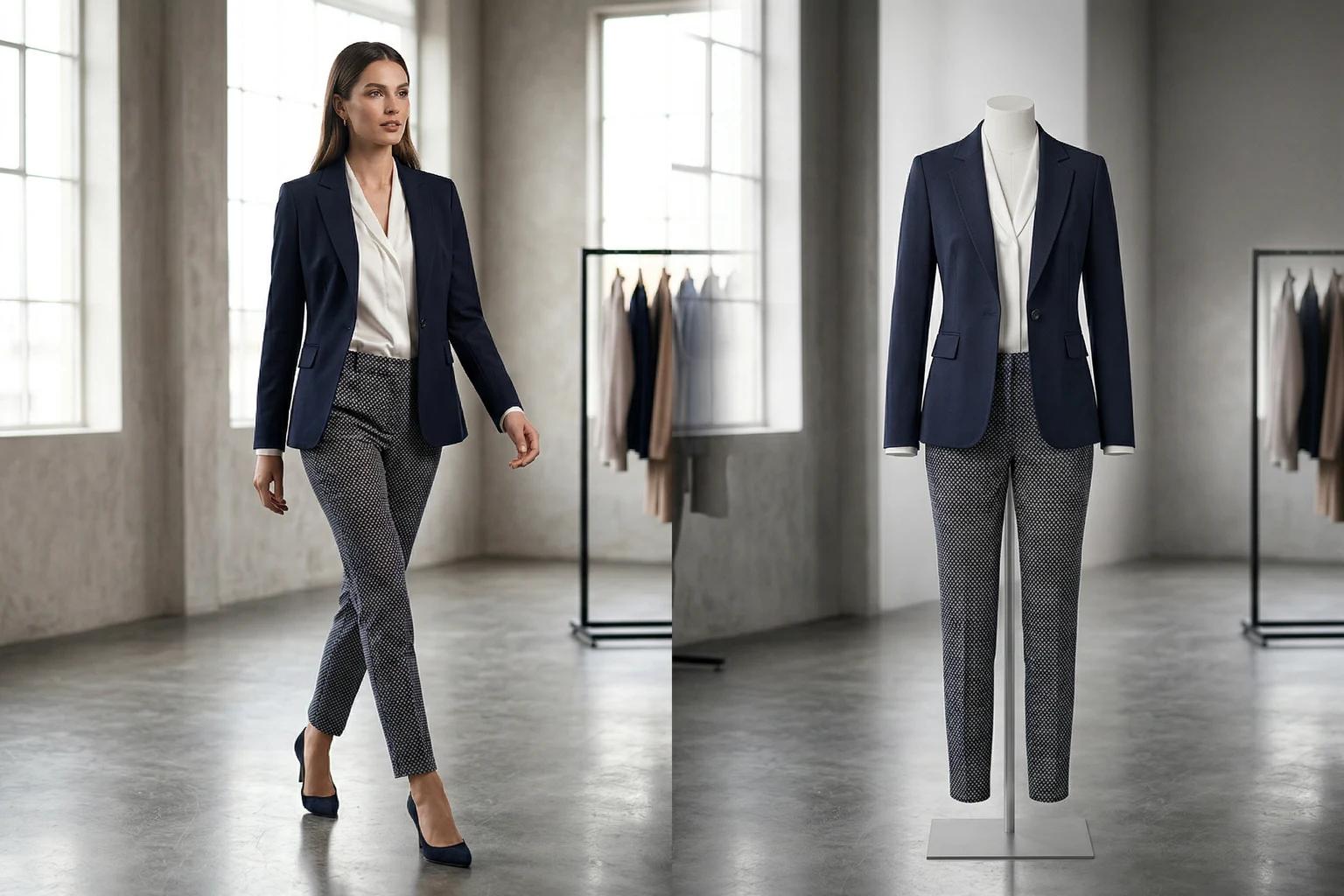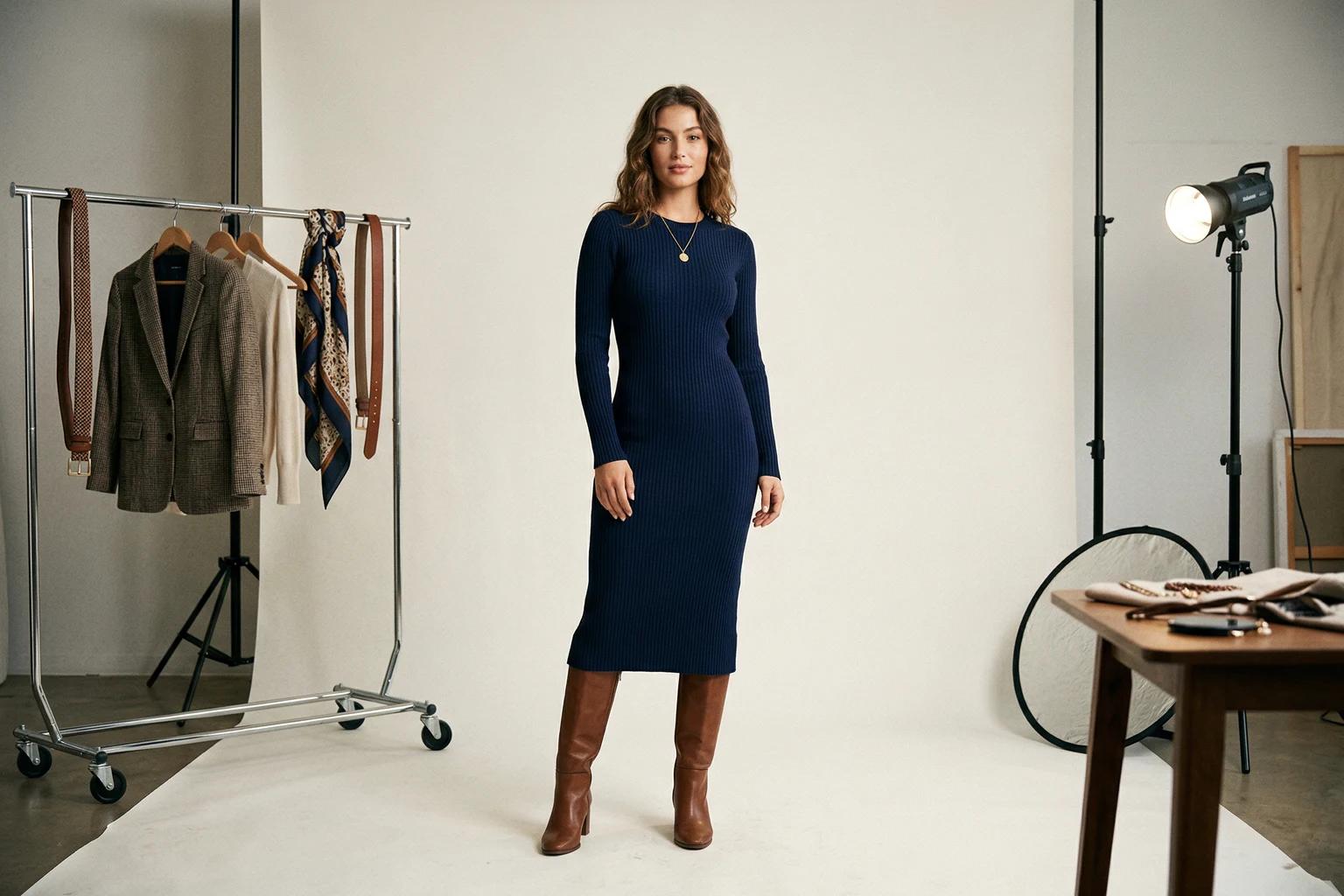
You do not need on-model imagery for every SKU on day one. You do need it for the products where body context changes the buying decision.
That is the part many fashion teams blur together. They know on-model images usually help. They also know they cannot afford to reshoot or regenerate an entire catalog every time a drop lands. So the discussion turns vague. Everyone agrees more on-body imagery would be nice, but no one defines which products deserve it first.
The better approach is to prioritize on-model coverage the same way you would prioritize paid spend, launch placement, or markdown protection. Start where the image is doing the most commercial work. This guide breaks down how to make that call without turning the process into a subjective debate.
Stop treating every SKU like it needs the same visual treatment
Some garments ask more from the image than others.
A simple rib tank in a carryover color may sell perfectly well with a clean flat-lay, mannequin frame, or one dependable on-body image. A bias-cut dress, cropped blazer, or wide-leg trouser usually does not. Those products create more questions around fit, drape, proportion, and silhouette. If the image does not answer them, the shopper hesitates.
That is why the real decision is not mannequin versus model in the abstract. It is where on-model context materially improves understanding. If your team is still sorting out the role of each source format, mannequin vs model photography for ecommerce is the right baseline. Once that is clear, prioritization gets much easier.
Start with fit risk, not visual ambition
The first filter is simple: which products become easier to shop when they are shown on a body?
Usually, those products fall into a few repeat categories:
- Dresses, jumpsuits, and skirts where length and movement matter
- Trousers and denim where rise, leg shape, and back fit affect confidence
- Blazers, outerwear, and tailoring where structure changes dramatically on-body
- Any silhouette with volume, drape, or a less obvious cut
These are the SKUs where flat product clarity is not enough on its own. The shopper wants to see how the garment hangs, where it hits, how it opens, and whether the proportions feel right in motion and at rest.
The difference becomes obvious when the garments themselves are asking different fit questions.
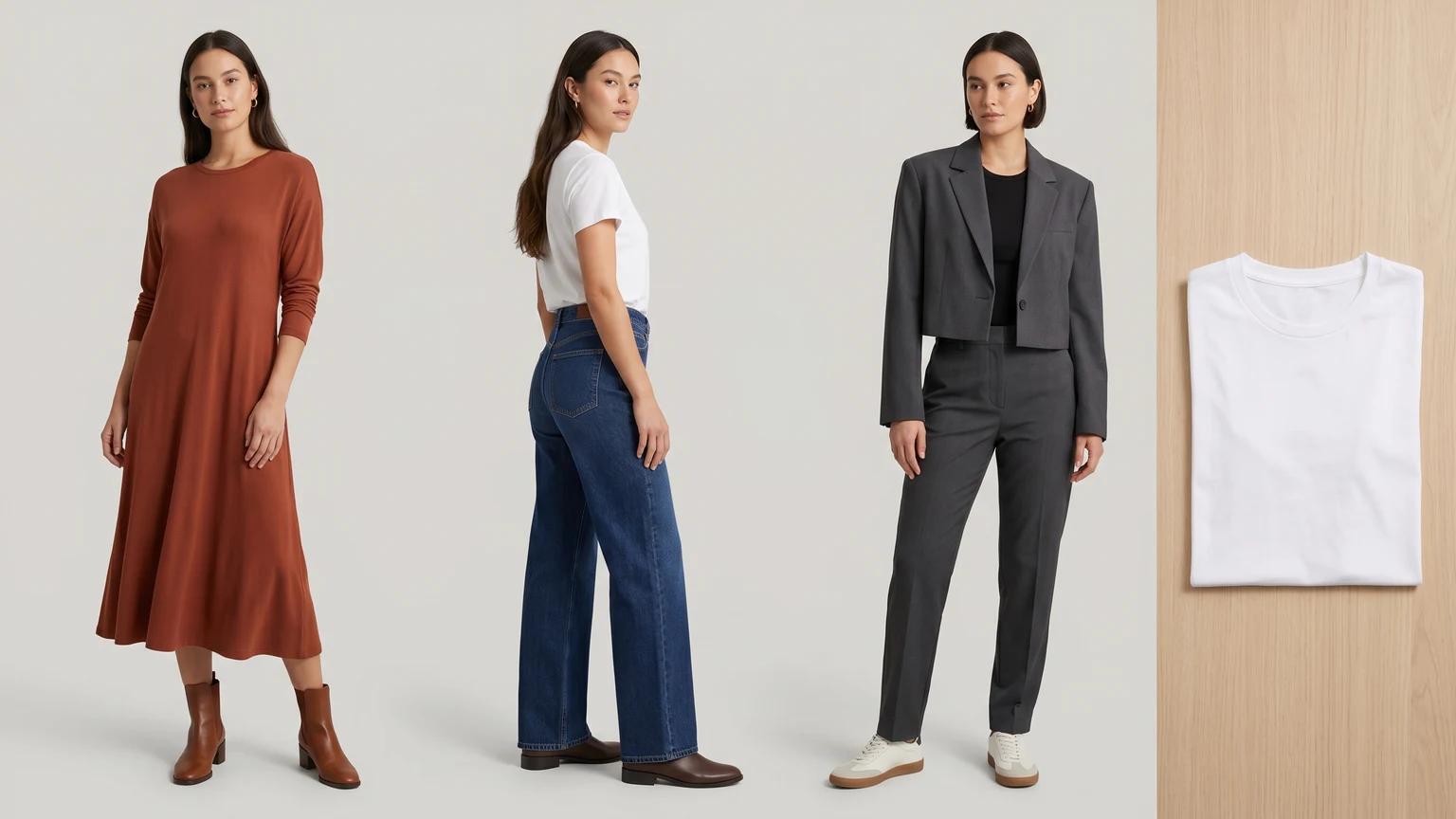
If you are deciding between two equally important products, the one with higher fit ambiguity should usually get on-model treatment first. A customer can infer a lot from a tee. They infer much less from a fluid trouser or a sharply cropped jacket.
Then layer in business value
Fit risk tells you where on-model imagery is useful. Business value tells you where it is urgent.
A product does not need to be difficult to style in order to justify better visuals. Sometimes it needs better visuals because it sits at the center of the business.
Start by looking at four groups:
- Best sellers that already convert and deserve stronger presentation
- New arrivals that need a faster read during launch week
- High-margin products where better imagery protects perceived value
- Traffic-driving styles used in email, paid social, or homepage placement
A practical example helps here. Imagine a 48-SKU drop with six hero products, twelve likely volume drivers, and thirty lower-risk support styles. Treating all 48 the same spreads time too thin. Prioritizing the six hero products for deeper on-model coverage and the twelve likely volume drivers for lighter on-body support is usually a much better commercial decision.
That is also how smaller teams stay efficient. They increase image quality where it is likely to matter most instead of spending evenly across the entire assortment. If budget pressure is part of the conversation, ecommerce fashion photography on a budget is the right companion read because it frames where selective investment beats blanket production.
Prioritize the PDP gaps that are already hurting clarity
A lot of teams choose priority SKUs by instinct. A cleaner method is to look for products where the current page is obviously missing a useful frame.
Common signals include:
- The hero image shows the garment, but not the silhouette clearly
- The product has only front-facing imagery and no side or back context
- Similar poses repeat without adding new information
- The page looks technically complete, but the product still feels hard to judge
This matters because on-model imagery is not only about aspiration. It is also about decision support. If the page is missing the frames that explain fit, the problem is structural. That is why how to build a fashion PDP image sequence that helps shoppers decide faster pairs well with prioritization work. It helps you see whether the issue is a missing on-body image, a weak sequence, or both.
In practice, some of your best candidates will already be live on site. They are the products that look fine at first glance but still leave the shopper doing too much guesswork.
Build a three-tier visual priority system
Once the team agrees on the signals, turn them into a repeatable system. That prevents every launch review from becoming a fresh argument.
One simple framework works for most brands:
- Tier 1: Hero SKUs Products with high fit sensitivity, high launch importance, or strong margin. These usually deserve a full on-model sequence, not just a single frame.
- Tier 2: Commercial support SKUs Products that benefit from one or two dependable on-body images, but do not need a full image story yet.
- Tier 3: Low-risk or long-tail SKUs Products that can stay on flat-lay or mannequin coverage until demand, seasonality, or channel needs justify more.
A tiered board also makes production easier to scope. Creative, ecommerce, and merchandising can see where deeper treatment is required and where consistency matters more than depth.
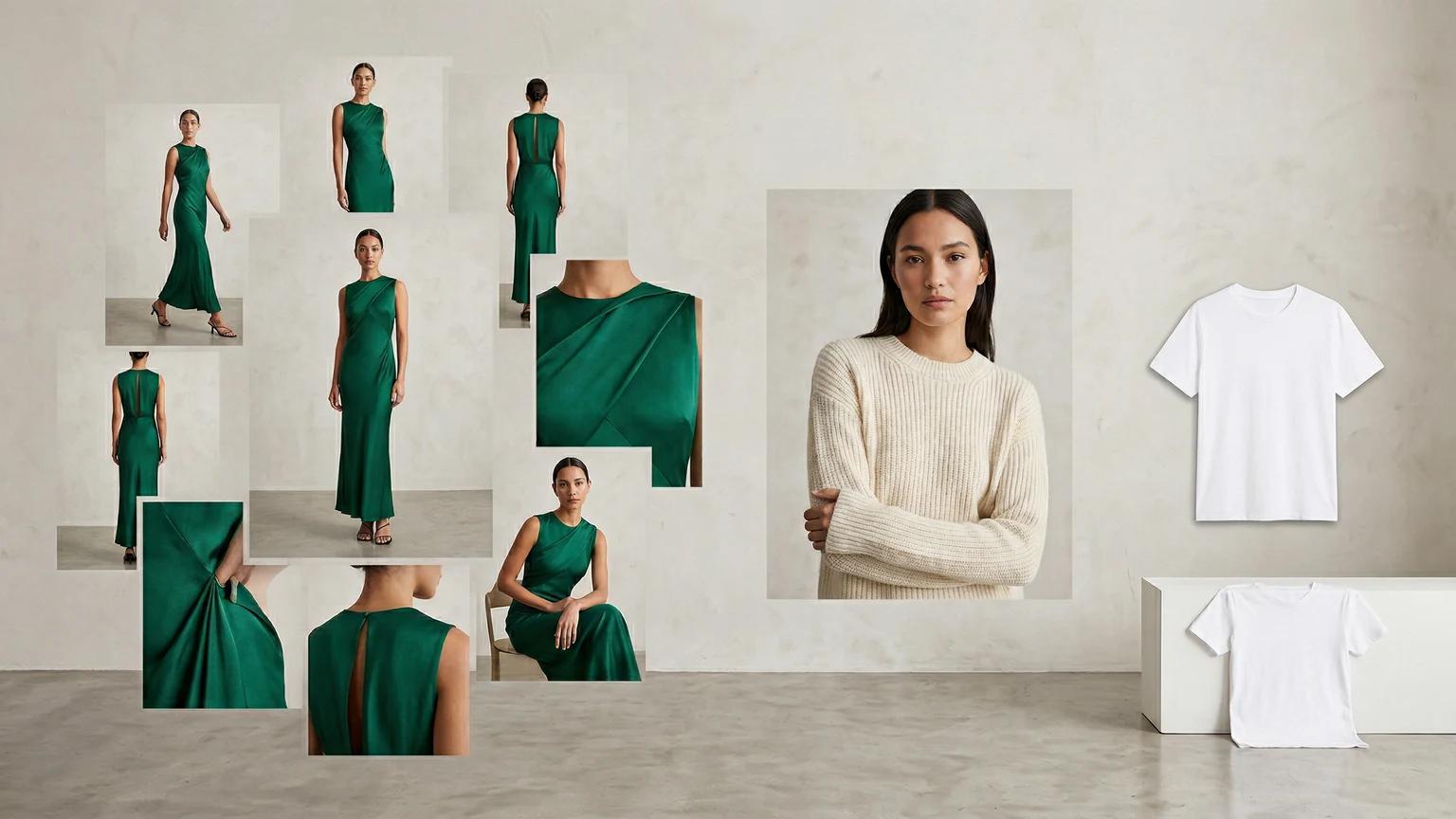
Tier 1 is where you spend the most attention. These are the styles where you want a clean hero, at least one alternate on-body frame, and enough variation to support PDP, launch, and possibly paid.
Tier 2 is more selective. Often one strong on-model image is enough to complete the page and give marketing a usable asset.
Tier 3 is where discipline matters. Not every replenishment basic needs full on-model treatment immediately. If the current assets are clear, consistent, and commercially sufficient, leave them alone.
Use existing assets before you add more production
Prioritization gets much easier once you stop assuming every on-model image needs to start from a new shoot.
Many brands already have the raw material they need. A clean flat-lay, mannequin frame, or older on-model shot can often become more useful with the right workflow. That is especially true when the goal is not to reinvent the brand world, but to close a specific catalog gap.
This is where Unstill becomes practical rather than theoretical. Instead of rebuilding an entire set, your team can use existing product assets to create the missing on-body coverage for the SKUs that actually need it first. That might mean turning a flat-lay into a readable on-model image for a launch dress, updating an older mannequin page for a denim best seller, or extending one strong source image into a more complete product page system. If you are working from older assets, how to refresh old fashion product photos without a reshoot and how to turn flat-lay photos into model images are both useful references.
The key is restraint. Use the workflow to solve the highest-value gaps first, not to create endless variation for products that are already selling clearly.
Make the review process commercial, not subjective
Once teams start prioritizing, the next risk is review drift. People fall back into asking which image they personally like more.
That is the wrong question.
A better review pass asks:
- Does this image make the garment easier to understand?
- Does it answer a fit question the current page was missing?
- Does it belong to a Tier 1 or Tier 2 SKU, or are we overproducing a Tier 3 item?
- Will this frame be useful outside the PDP, such as email or paid social?
- Does it improve the catalog without breaking visual consistency?
Those questions keep the process grounded in merchandising. They also make it easier to say no when a visually attractive image is not actually solving a commercial problem.
The practical takeaway
On-model imagery should go first to the products where body context reduces uncertainty and supports revenue. That usually means fit-sensitive garments, launch-critical styles, strong sellers, and pages that are still missing a clear visual answer.
When you prioritize that way, your catalog gets sharper faster. The brand looks more intentional. The production plan gets easier to defend. And the team stops wasting time debating whether every SKU deserves the same treatment.
If you want to test that system on your own assortment, start with a small Tier 1 set inside Unstill. Pick the products where fit clarity matters most, extend the assets you already have, and build on-model coverage where it will actually help shoppers decide.